How to Appraise and Sell Sterling Silverware
Uncover the true worth of your family silver. We guide you through evaluating hallmarks, weight, and condition so you can sell with confidence.
Expert Evaluation Criteria
How our numismatic experts assess the true market value of your items.
Hallmark Verification
We check for “925,” “Sterling,” or the Lion Passant to confirm authenticity.
Weight Assessment
True intrinsic value relies on solid silver mass, accounting for weighted knives and bases.
Plated vs. Sterling
We quickly identify EPNS and silver-plate to separate them from genuine sterling flatware.
Understanding the Worth of Your Silverware
When you inherit or discover a beautiful chest of old flatware, you might wonder what it’s truly worth. Over our decades of evaluating precious metals, we’ve found that understanding your silver doesn’t have to be intimidating. Many people feel overwhelmed by the subtle stamps and heavy boxes, but we are here to walk you through exactly how to appraise and sell your sterling silverware with confidence.
The Secret is in the Hallmarks
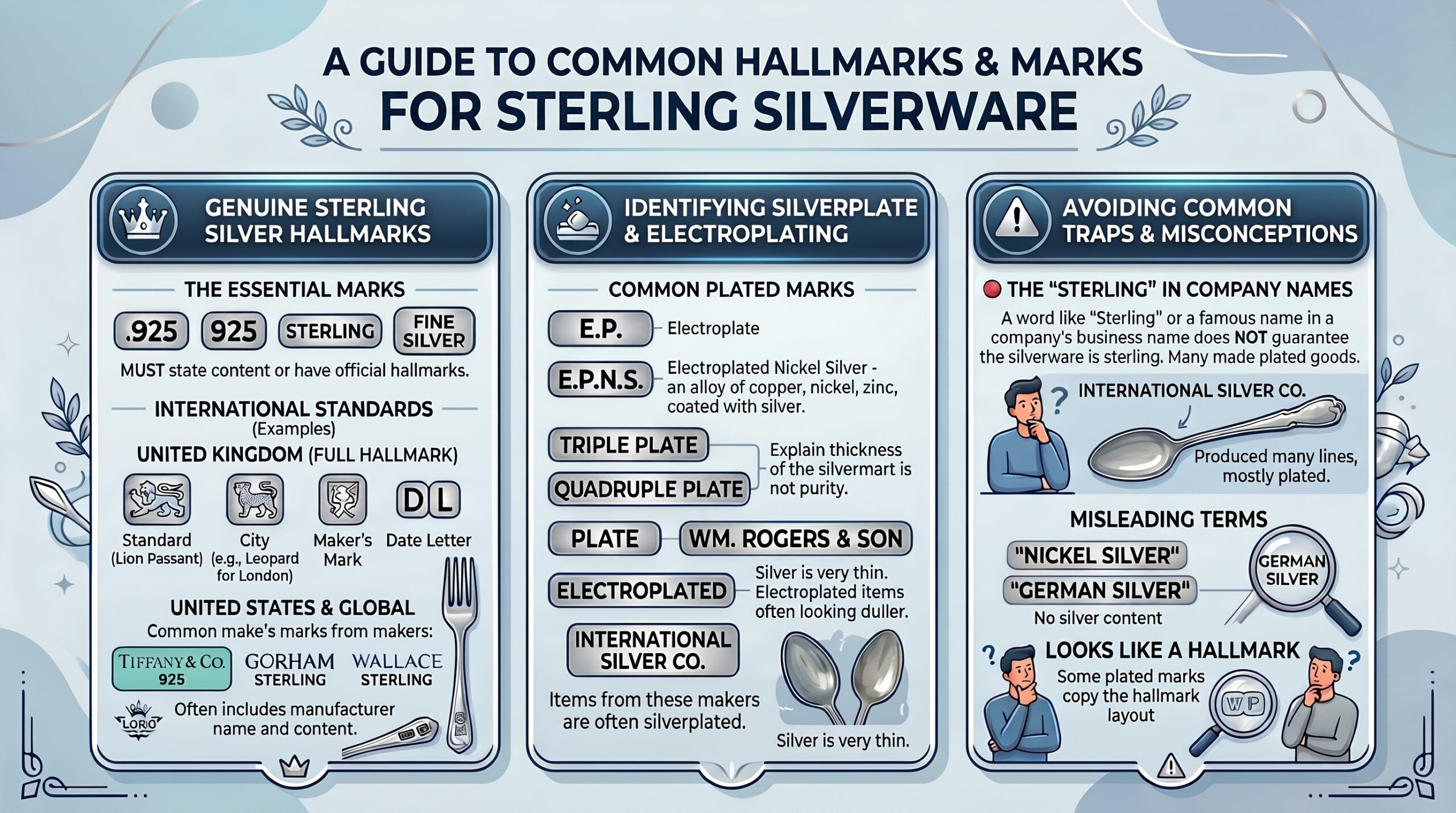
The very first thing we do during an appraisal is look for the hallmarks. Turn your spoon or fork over and look closely at the back of the handle. Do you see the word “Sterling”, the number “925”, or perhaps a tiny stamp of a walking lion—known in the industry as the Lion Passant?
These marks are excellent signs. They are the manufacturer’s guarantee that the piece consists of 92.5% pure silver. If your pieces carry these stamps, you possess genuine sterling silver, which holds substantial intrinsic value on the precious metals market.
Beware of Silver-Plated Flatware
One of the most common questions we receive involves silver-plated items. It can be incredibly disappointing to bring in a massive, heavy box of beautiful antique flatware only to learn it holds almost no precious metal value. To save you that frustration, here is what we look for: if you see the letters EPNS (Electroplated Nickel Silver), the words “International Silver“, or phrases like “A1” or “Quadruple Plate“, you are looking at silver-plated pieces.
Silver plate is essentially a base metal—like copper or brass—covered in a microscopically thin layer of silver. Because the actual amount of silver used is practically non-existent, these pieces do not hold any meaningful intrinsic value and unfortunately cannot be sold for silver content.
The Reality of Weighted Handles
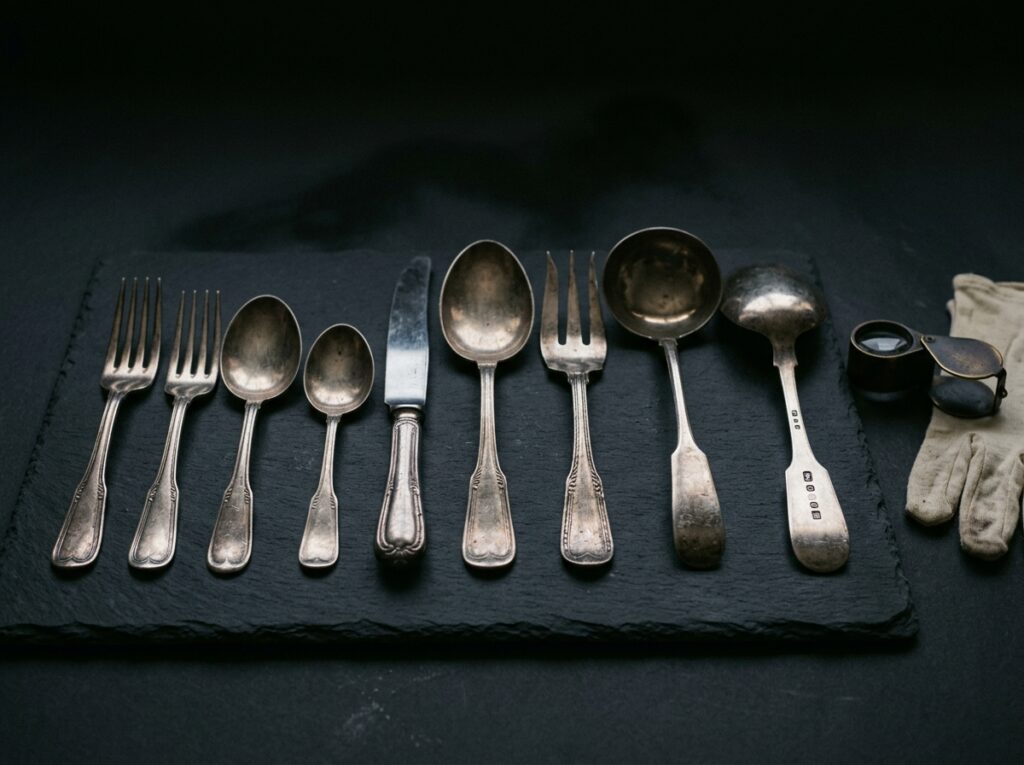
If you’ve ever picked up a sterling silver butter knife, a large carving set, or an ornate candlestick and felt surprised by its satisfying heft, it is important to know that it is likely not solid silver. Because pure silver is a relatively soft metal, everyday items that require structural strength must be reinforced.
Manufacturers solve this by creating a thin outer shell of sterling silver and filling the inside of the handle with cement, pitch, or resin. You will often see the word “Weighted” or “Reinforced” stamped near the sterling mark. When we assess the intrinsic value of these items, we calculate the estimated weight of the thin silver foil surrounding that core, rather than weighing the heavy cement inside.
Appraising Complete Sets vs. Individual Pieces
Whether you have an extensive flatware set, a stunning vintage tea service, or a mismatched collection of spoons, we evaluate each scenario uniquely. If your silver is broken, deeply tarnished, or severely dented, do not worry—we determine your payout based purely on the raw intrinsic value of the 925 silver. However, if you bring us a complete, highly-desirable flatware set or an intact, ornate tea service in excellent condition, these pieces may command a premium beyond their pure metal content due to collector demand.
We pride ourselves on offering transparent, honest appraisals. We will gladly sit down with you, sort the plated pieces from the genuine sterling, factor in any weighted handles, and explain exactly how we arrive at our final offer.
QUICK FACTS
- “Sterling” or “925” stamps indicate 92.5% silver.
- The Lion is a traditional British sterling hallmark.
- EPNS indicates silver-plated and no intrinsic value.
- Knife handles are often weighted with resin or cement.
- Flatware and plate sets have strong demand.
Frequently Asked Questions
What is the difference between sterling silver and silver-plated flatware?
Sterling silver contains 92.5% pure silver and will carry hallmarks like “925”, “Sterling”, or a Lion Passant. Silver-plated flatware features a very thin layer of silver applied over a base metal. Plated items often carry marks like “EPNS” (Electroplated Nickel Silver) and hold very little intrinsic value.
How do weighted handles affect the appraisal of my silverware?
Many sterling silver items, particularly butter knives and candelabras, are not solid silver. They have hollow silver outer shells filled with cement, pitch, or resin to provide structural integrity. When we evaluate these items, we calculate the intrinsic value based strictly on the thin layer of actual sterling silver, not the total gross weight of the piece.
Should I polish my sterling silverware before bringing it in?
No, it is entirely unnecessary to polish your silverware before an appraisal. Tarnished silver retains the exact same intrinsic value as polished silver. We recommend leaving it as-is to save yourself the time and effort.
Does a complete tea service hold more value than individual pieces?
It can. While broken or mismatched pieces are strictly valued on their silver content, a beautiful, fully intact tea service or a highly sought-after, complete flatware set in excellent condition may command a premium beyond its raw intrinsic value due to collector demand.

Ready for an Evaluation?
Make the short, secure drive to our Scottsdale office.
Give us a call to schedule your private consultation today.